



Chickens, How To, Info Guides
How High Should a Chicken Coop Be Off the Ground?
May
 ChatGPT
 Claude
 Perplexity
 Grok
Grok
 Google AI
 You
You
 WhatsApp
 LinkedIn
If you’re setting up your first chicken coop or thinking about upgrading your current setup, one question comes up more than you’d expect. Does it matter how high off the ground your coop sits? Spoiler alert: yep, it certainly does!
As backyard chicken keepers ourselves, the Somerzby team has seen firsthand how a well-elevated coop can make a huge difference to your flock’s health, safety and happiness.
In this guide, we’ll explain why raising chickens in an elevated coop is such a good idea, what the minimum height should be, and what to do if your current setup is sitting flat on the earth. Whether you’re brand new to raising chickens or a seasoned keeper ready for a new coop, we’ve got the advice you need to create the perfect home for your feathered friends!
Key Takeaways
- Raising a coop improves predator protection, airflow, moisture control, temperature regulation and even gives your chickens extra usable space underneath.
- Around 50cm is a good minimum height, but the ideal setup depends on predators, climate, bird mobility and your own comfort when maintaining the coop.
- You can elevate an existing coop using simple methods like bricks, pavers or a tall timber frame.
- Pre-made flatpack coops provide a faster, more reliable solution compared to DIY builds.
- When buying a chicken coop, look for sufficient height, strong wire mesh, proper roosting and nesting space, an adequate run size, and solid build quality suited to your flock and environment.
Why Raise a Chicken Coop Off the Ground?
You’ll often notice that most chicken coops are raised above ground level, and they’re elevated for good reason. The benefits go well beyond aesthetics, covering everything from predator protection to your chickens’ long-term wellbeing. Here’s why an elevated coop is worth every centimetre.
Predator Protection
One of the most important factors in coop design is keeping your flock safe from things that want to eat them. Raising your chicken coop off the ground makes it significantly harder for ground-dwelling predators like foxes, snakes and rodents to access your hens and their eggs. It also prevents rats and mice from nesting underneath a wooden floor, which is a surprisingly common problem in ground-level coops. A raised coop is a more predator-proof coop, and normally a safer setup from day one.
Better Air Circulation & Ventilation
Good chicken coop ventilation is essential for a healthy flock, and elevation plays a big role in achieving it. Lifting the coop off the ground encourages airflow both underneath and through the structure, helping to keep the interior fresh and dry.
On the other hand, poor ventilation leads to a build-up of heat and ammonia from droppings, which can seriously affect your chickens’ respiratory health over time. A raised coop naturally improves air circulation, making it much easier to maintain a clean and comfortable environment for your birds year-round.
Lower Moisture & Mould Risk
A coop sitting directly on the ground is far more susceptible to moisture, especially during winter months or in areas with heavy rainfall and poor drainage. Damp conditions can quickly lead to mould, bacteria and illness in your flock.
Whether you have a dirt floor or a concrete pad beneath the coop, raising it off the ground allows moisture to escape rather than seep upwards, keeping things drier and healthier inside. It also extends the life of the timber, saving you money on repairs in the future.
Temperature Regulation
Elevation helps with temperature regulation in both directions. During cold months, airflow beneath the coop reduces ground chill coming up through the floor. In the warmer months, that same airflow helps keep your chicken coop cool inside.
This is particularly valuable in Australia, where summers can be scorching and keeping your chickens comfortable is a big challenge. A coop raised off the ground gives your flock a more stable living environment throughout the year, from cold winter nights through to baking hot summer days.
Bonus Space Underneath
Here’s a perk that many first-time chicken keepers don’t think about. The area underneath a raised coop becomes prime real estate for your flock. Chickens love sheltering under there on hot days, dust bathing in the shade, and retreating from inclement weather and harsh weather conditions.
The empty space underneath the coop is naturally cool, protected and well-ventilated. You can also use the space for storage, keeping feed, bedding, and other supplies tucked away and dry.
Easier Coop Cleaning and Egg Collection
A taller coop is simply easier to look after. Whether you’re reaching in to collect eggs from nesting boxes, topping up feeders or tackling a full-coop clean, being able to reach in comfortably makes the whole job quicker and more enjoyable. This is especially true for tall adults, seniors or anyone who knows the particular misery of a sore back after crouching for too long. The easier it is to spend time with your chickens, the more you’ll love keeping them!
How High Should a Chicken Coop Be Off the Ground?
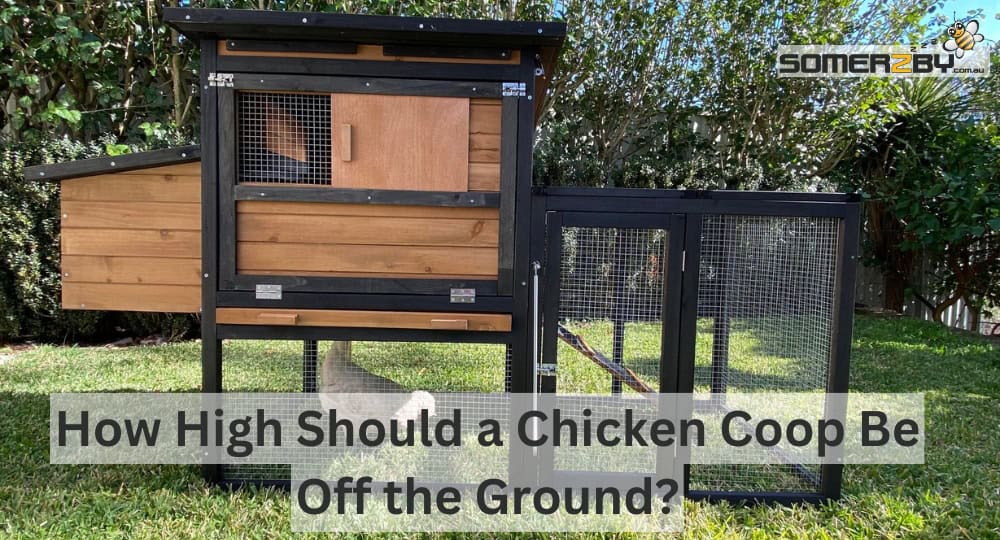
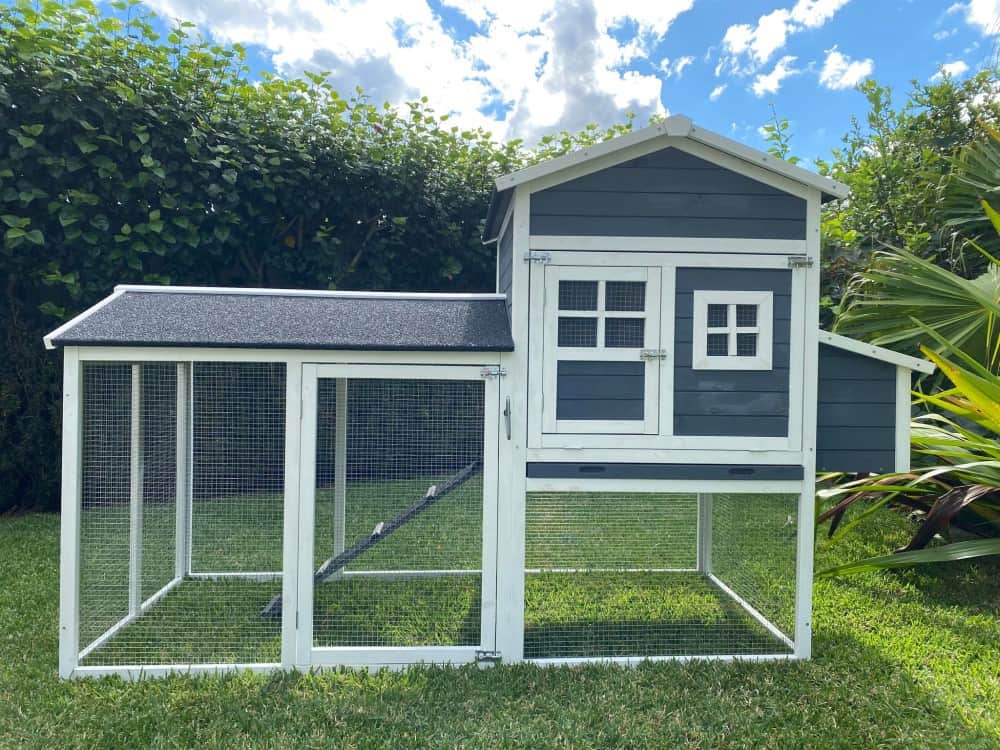
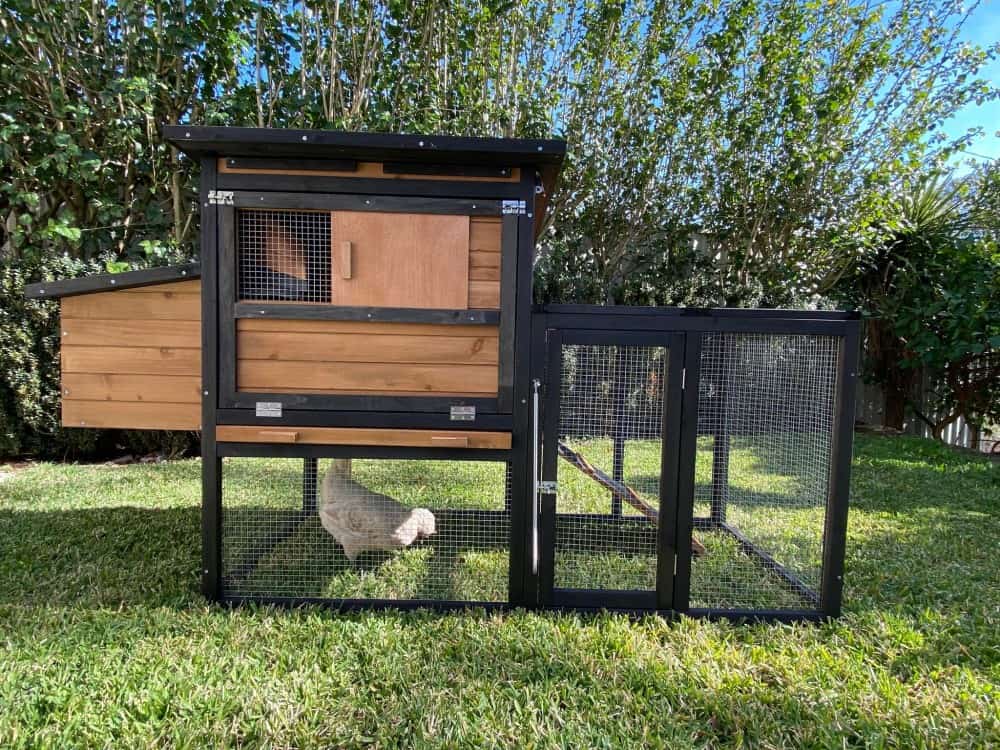
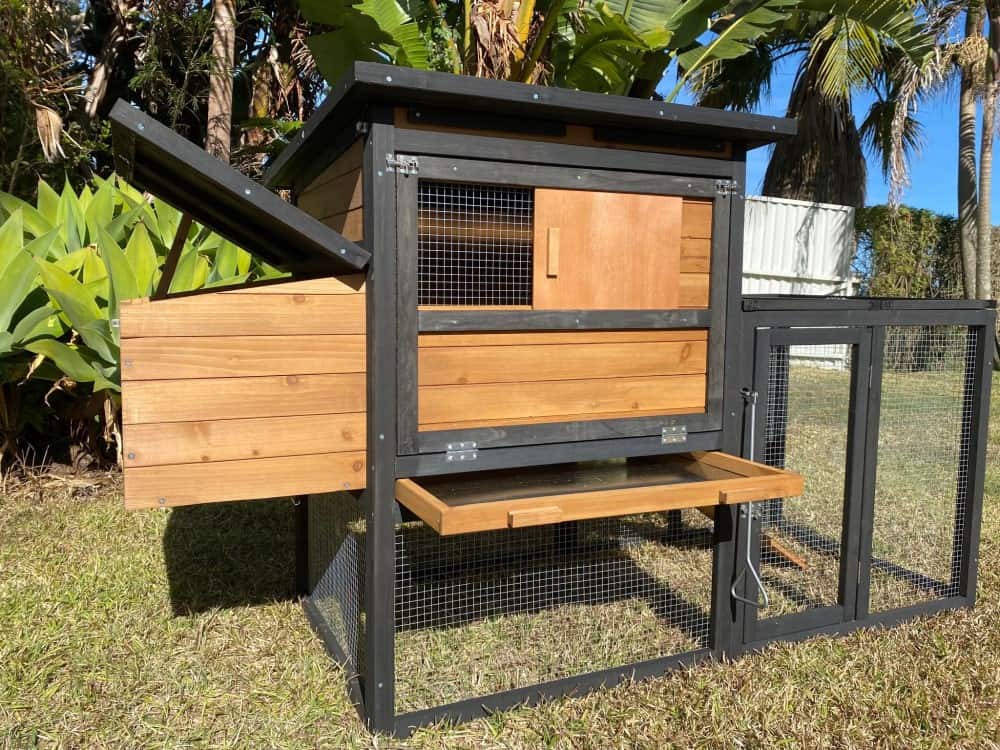
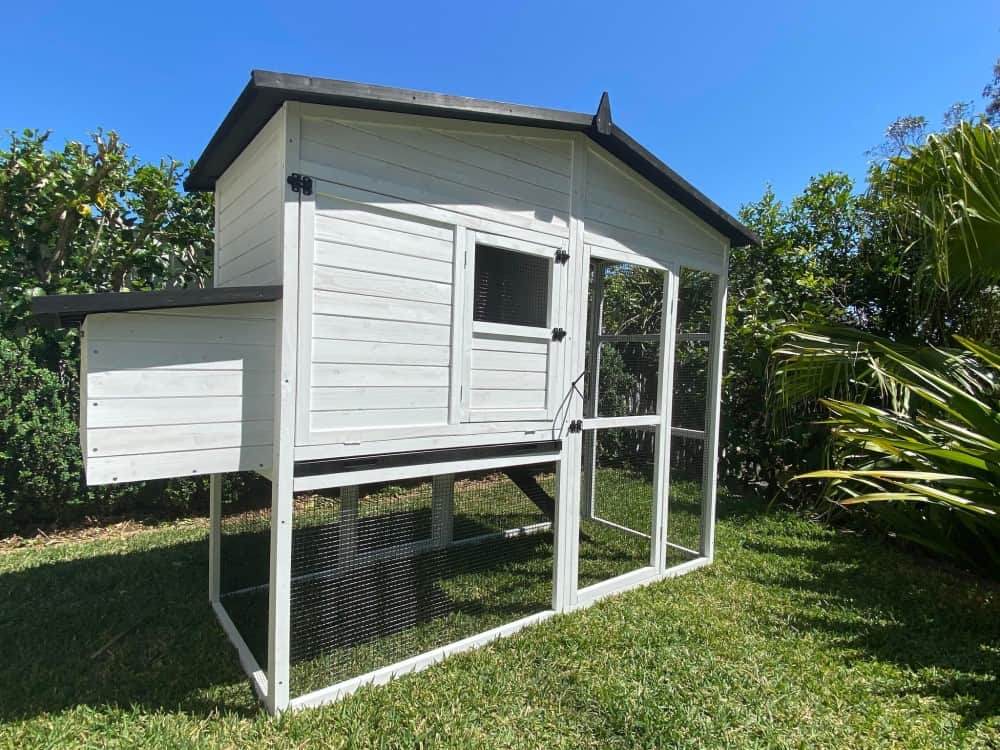
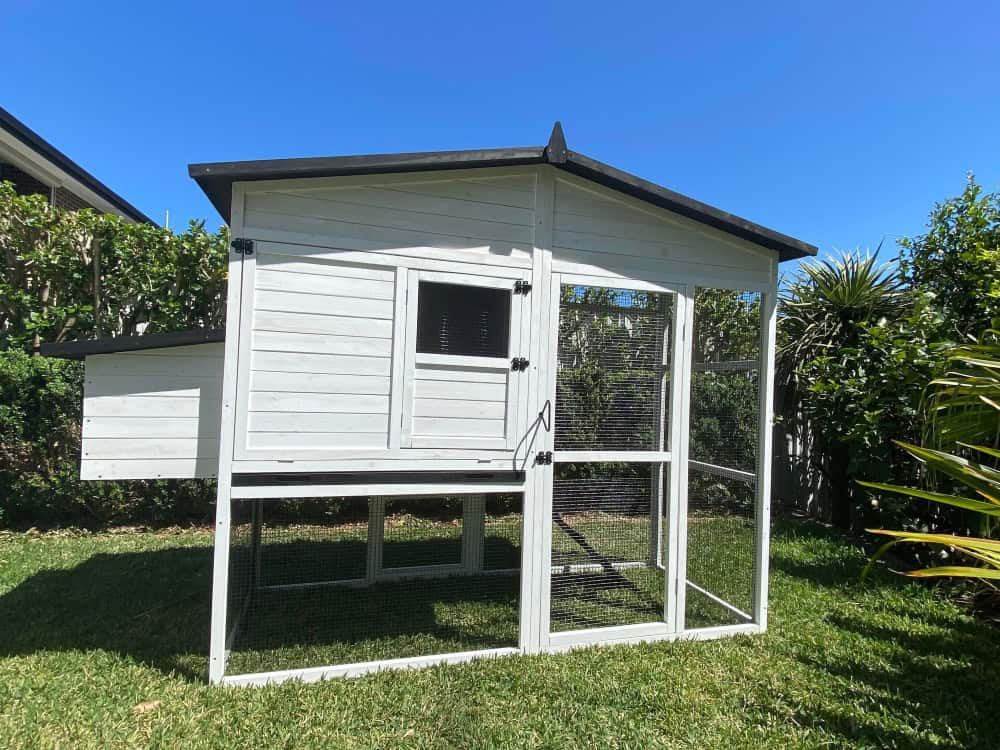
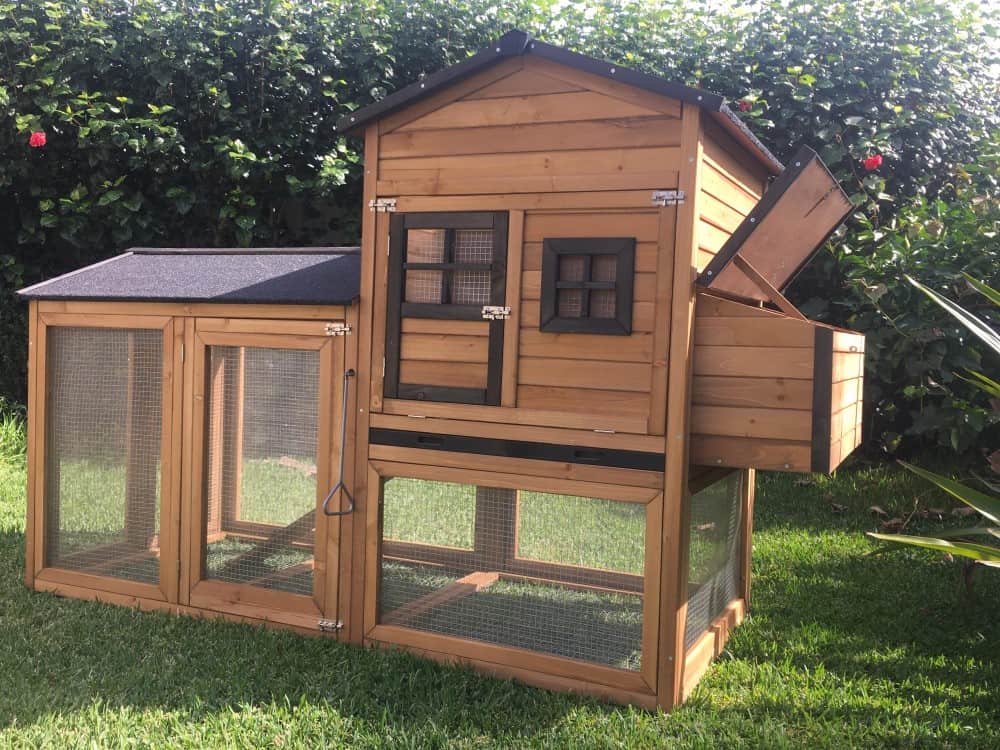
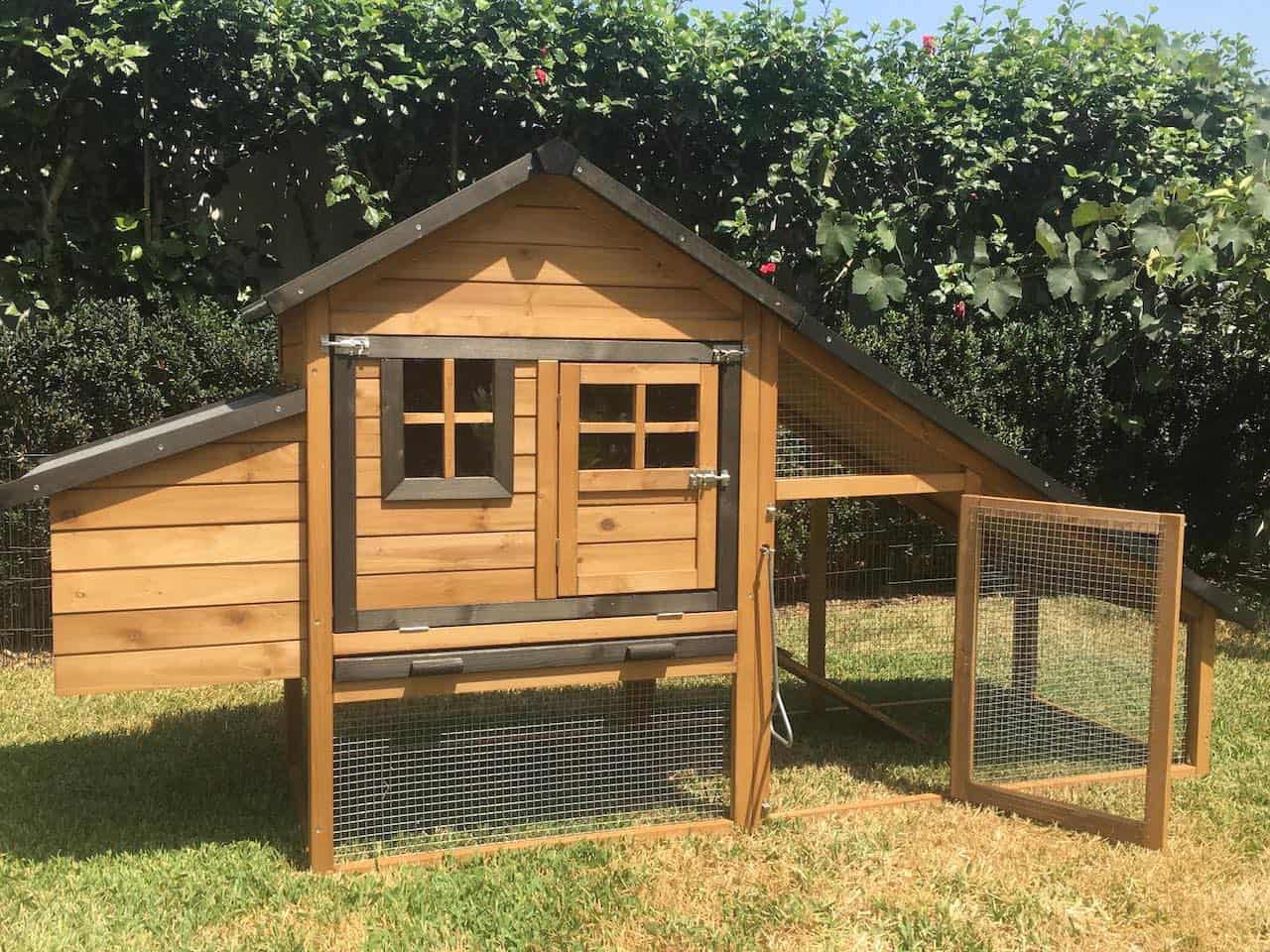
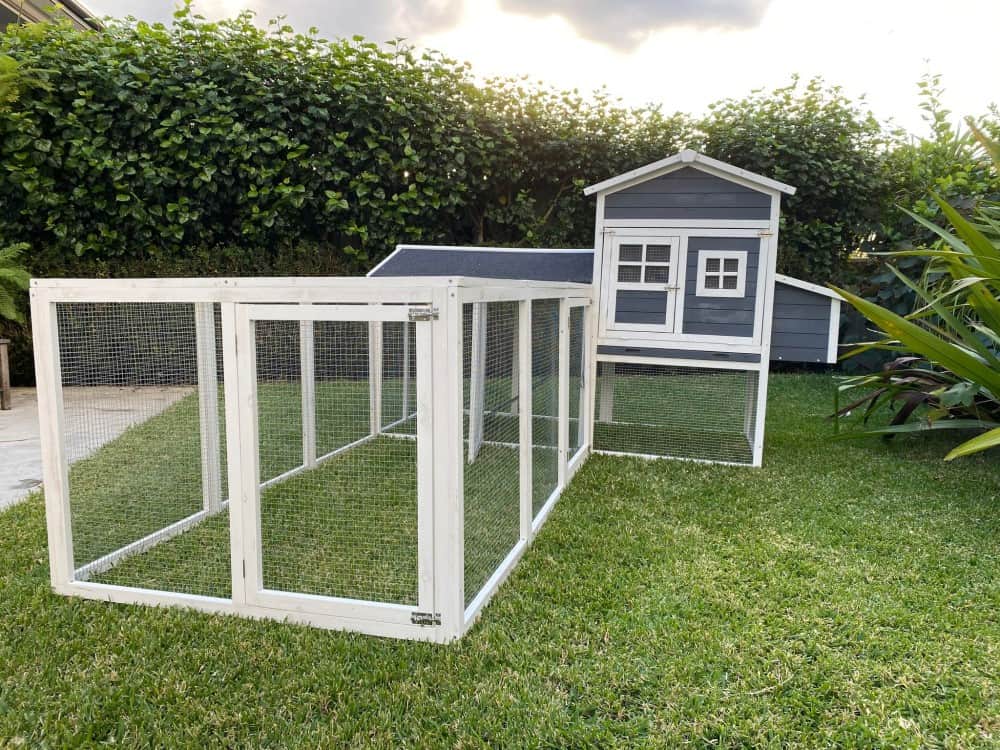
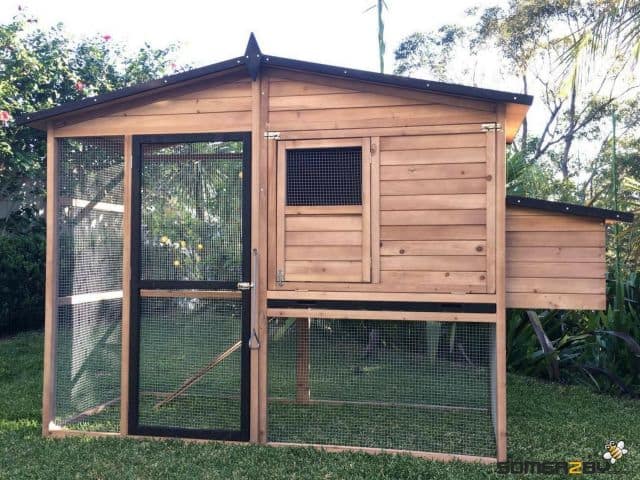
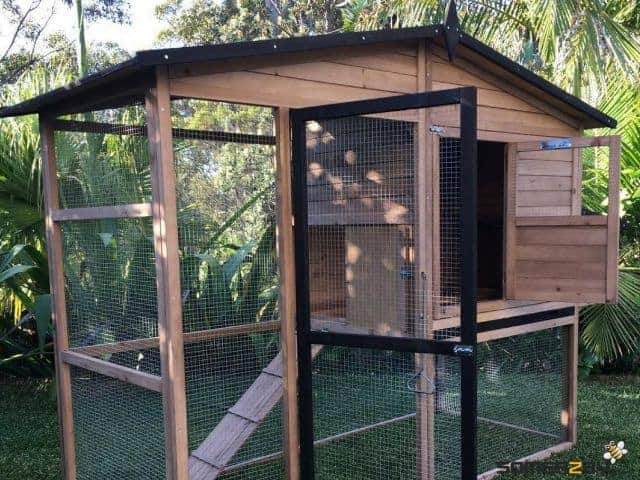
From our experience, the minimum height we’d recommend for your chicken house and nesting boxes is around 50cm (approximately 20 inches) off the ground. This is enough to deter most predators, promote good airflow, and still allow your chickens to get in and out comfortably using a ramp.
That said, there’s no rule you need to follow. The ideal height for your raised coop depends on a few important factors:
- Predator pressure in your area: If foxes, snakes, or rodents are a known problem, going higher than the minimum height gives you extra peace of mind.
- Your local climate: In areas prone to flooding or heavy rainfall, a higher elevation adds security during winter months or extreme weather.
- Your flock’s mobility: Baby chicks, senior birds, chickens with leg or vision problems, and some duck breeds can struggle with steep ramps. A lower coop or ground-level setup may suit them better.
- How much vertical space you want: A taller coop not only improves airflow but also gives your chickens more room to stretch, perch and behave naturally. If you’re wondering how much vertical space is enough, aim for at least enough headroom for your birds to stand upright on their roosting bars without touching the ceiling.
- Your own comfort. If bending over isn’t your idea of a good time, a taller coop makes coop cleaning and egg collection much more manageable.
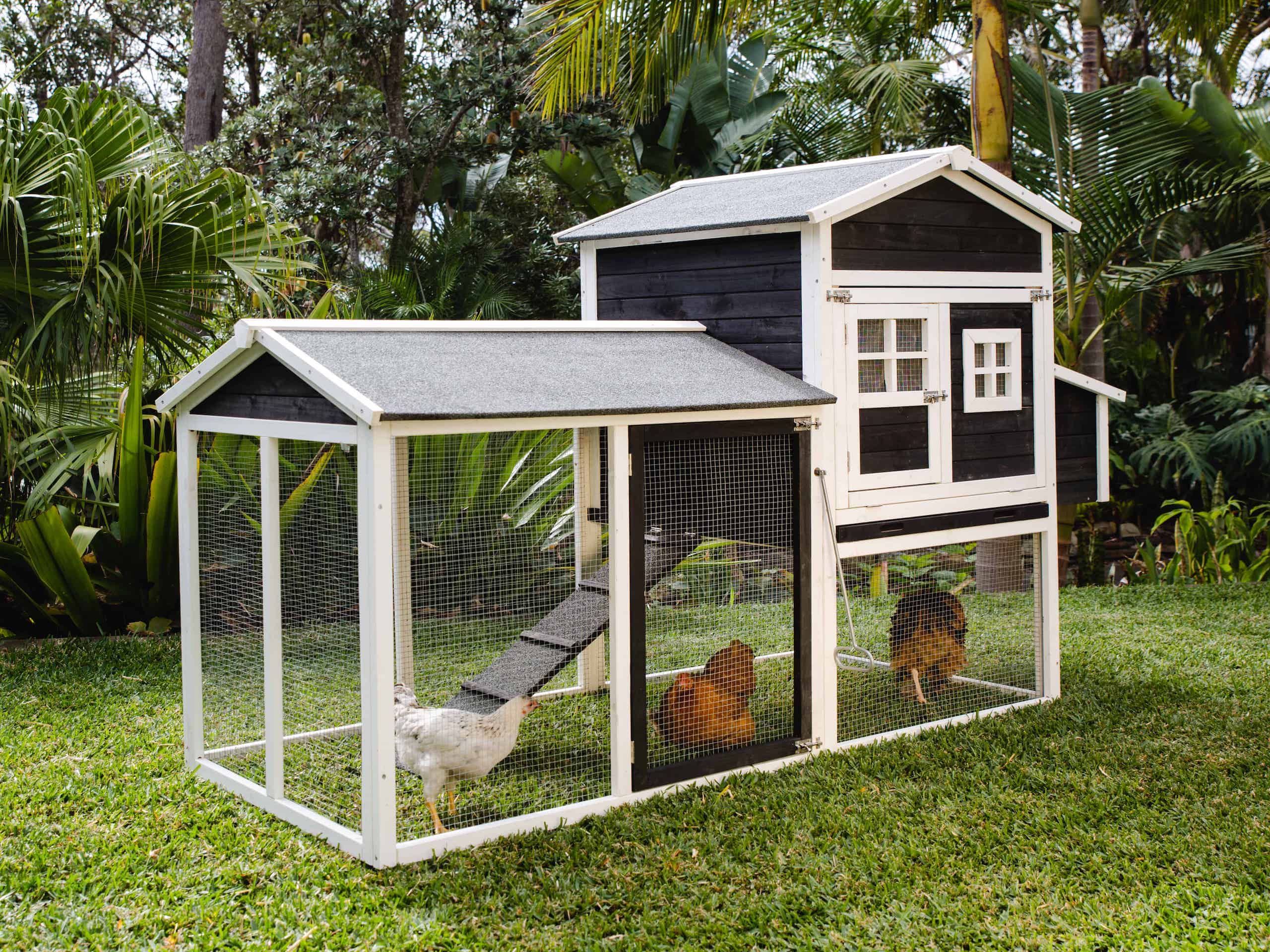
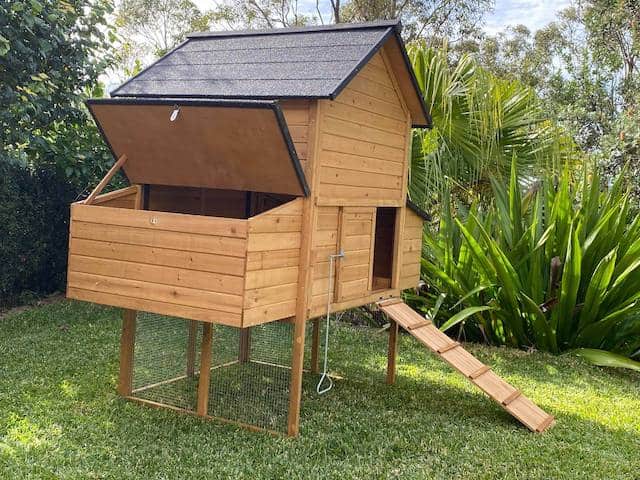
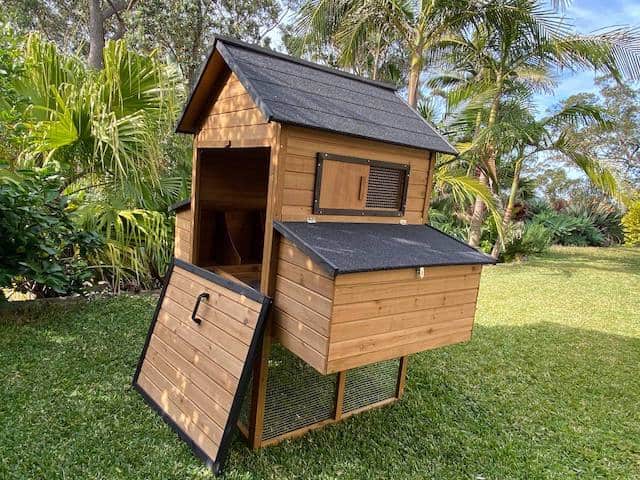
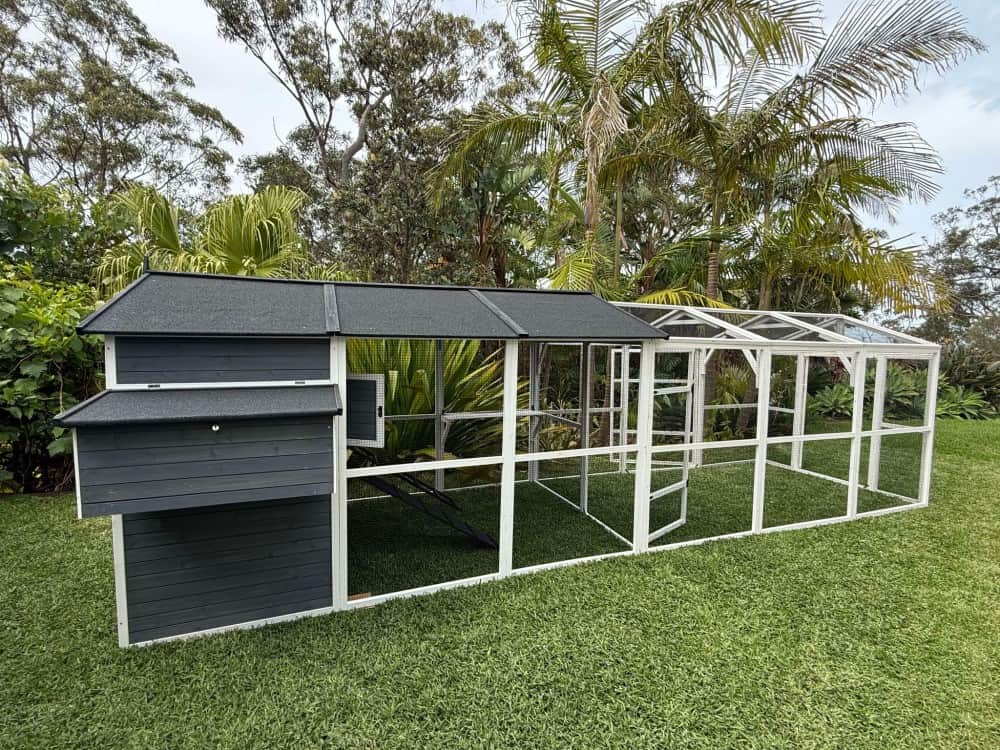
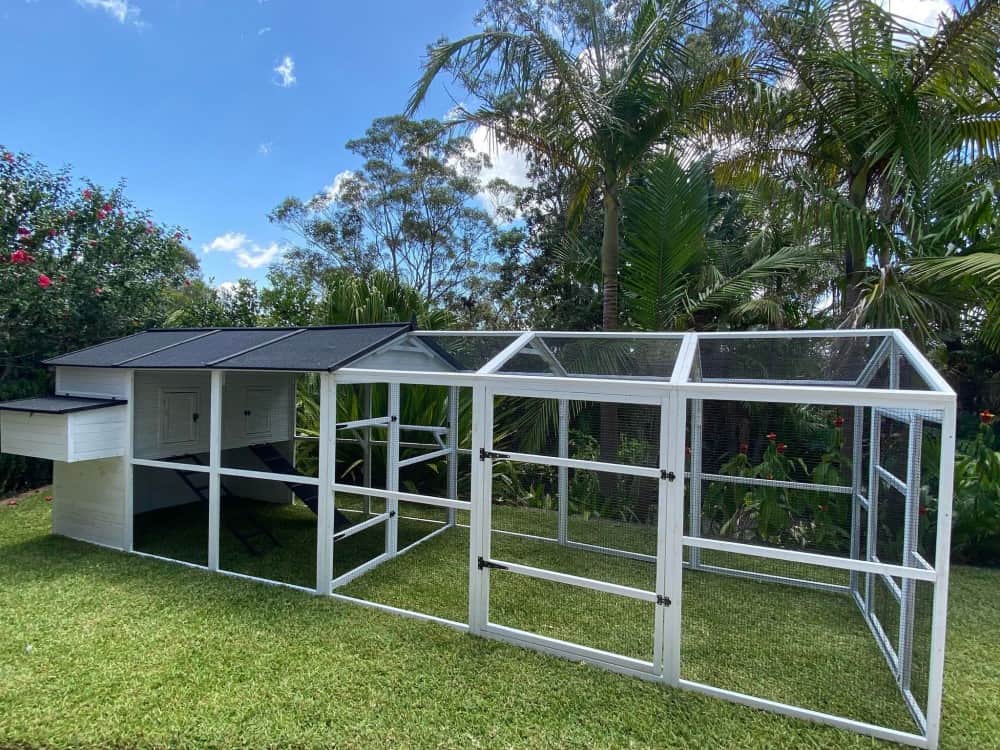
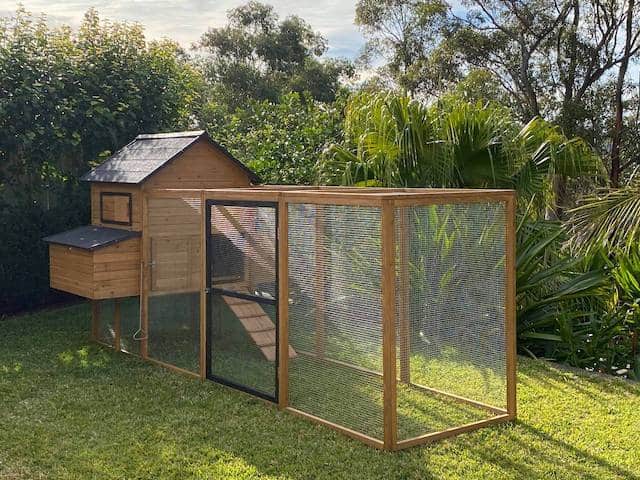
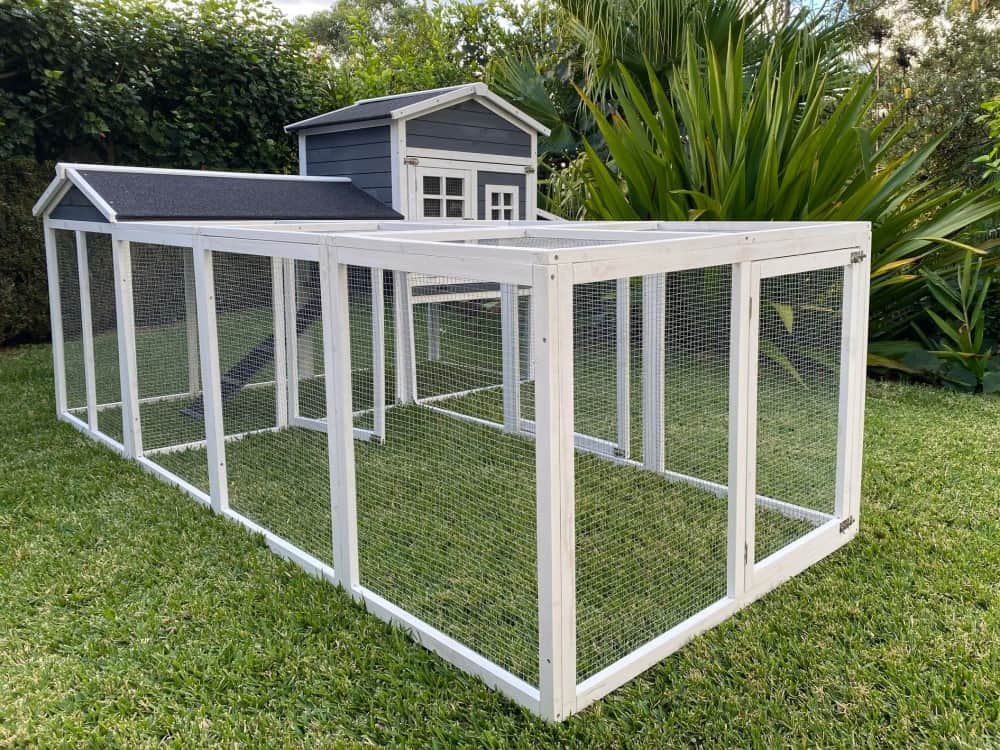
When buying a Somerzby flatpack coop, small and large coops are designed with different elevations. Small chicken coop setups, like the Cottage Chicken Coop or Bungalow Chicken Coop, tend to sit a little lower to the ground.
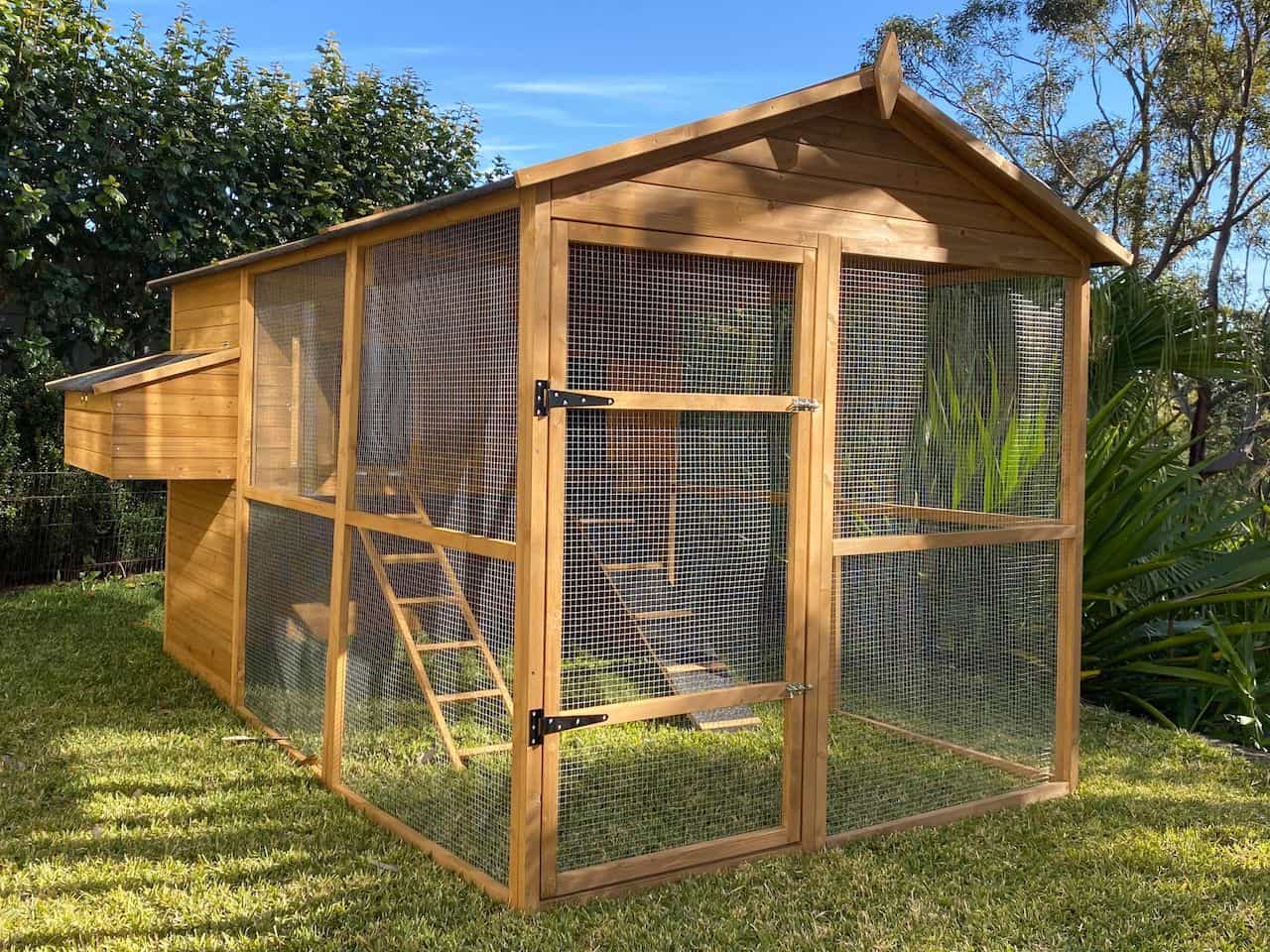
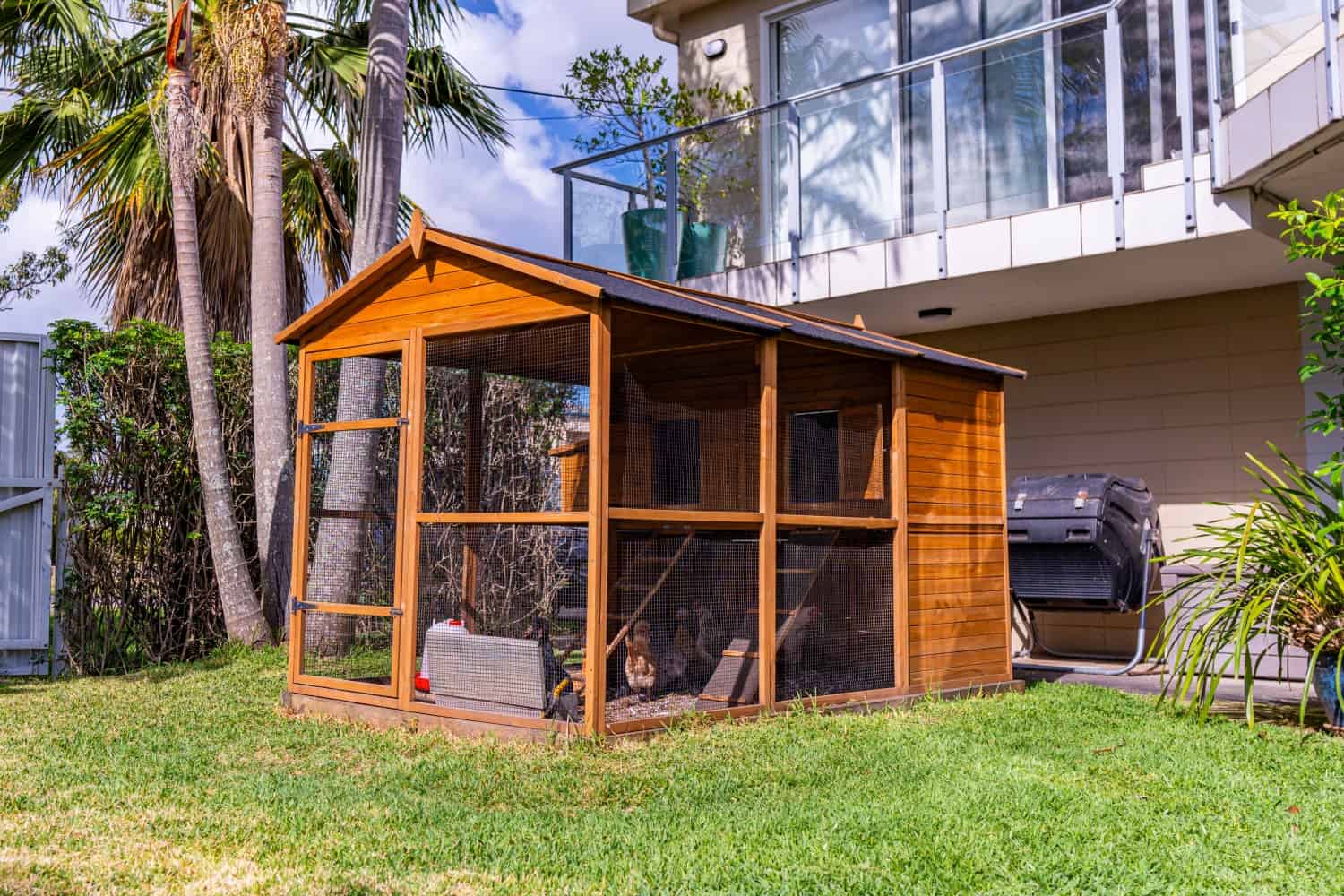
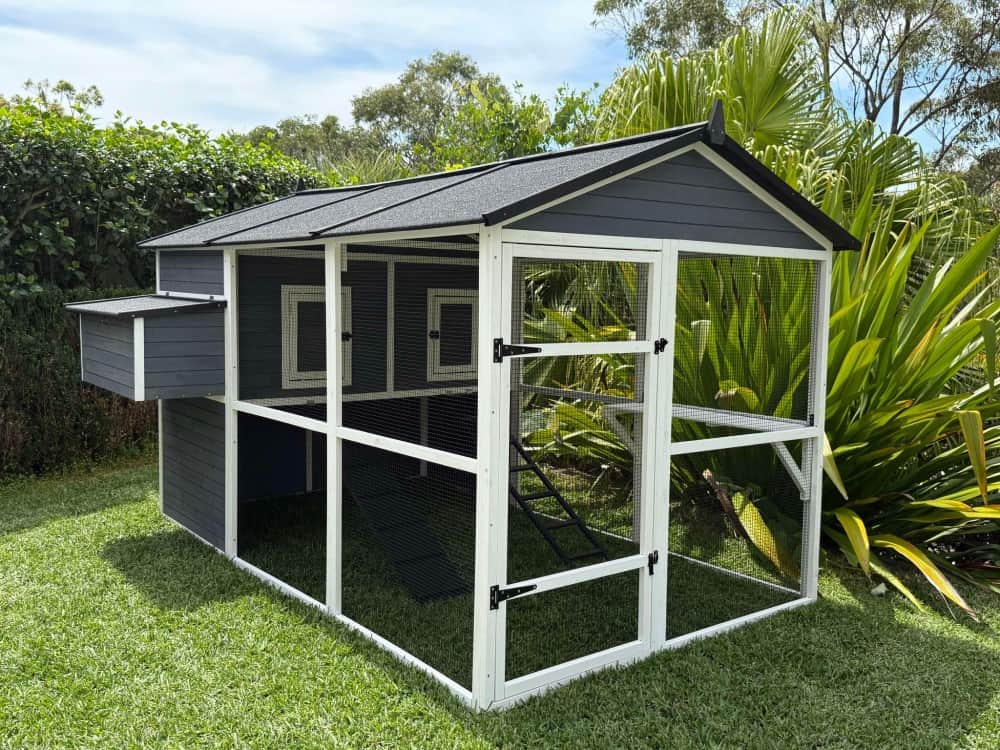
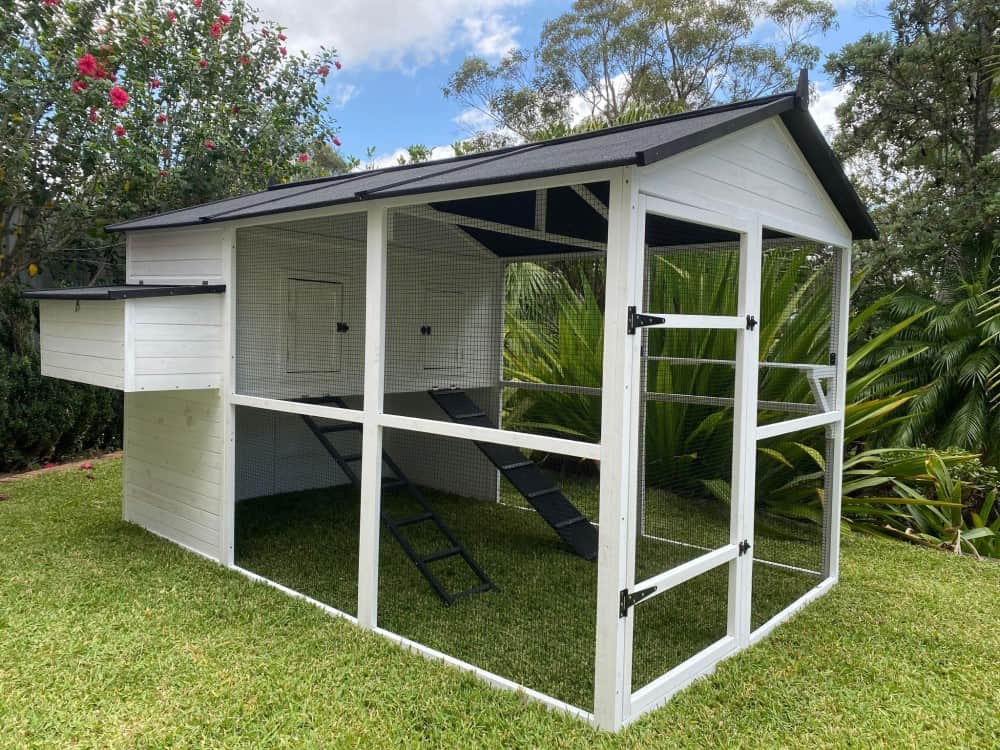
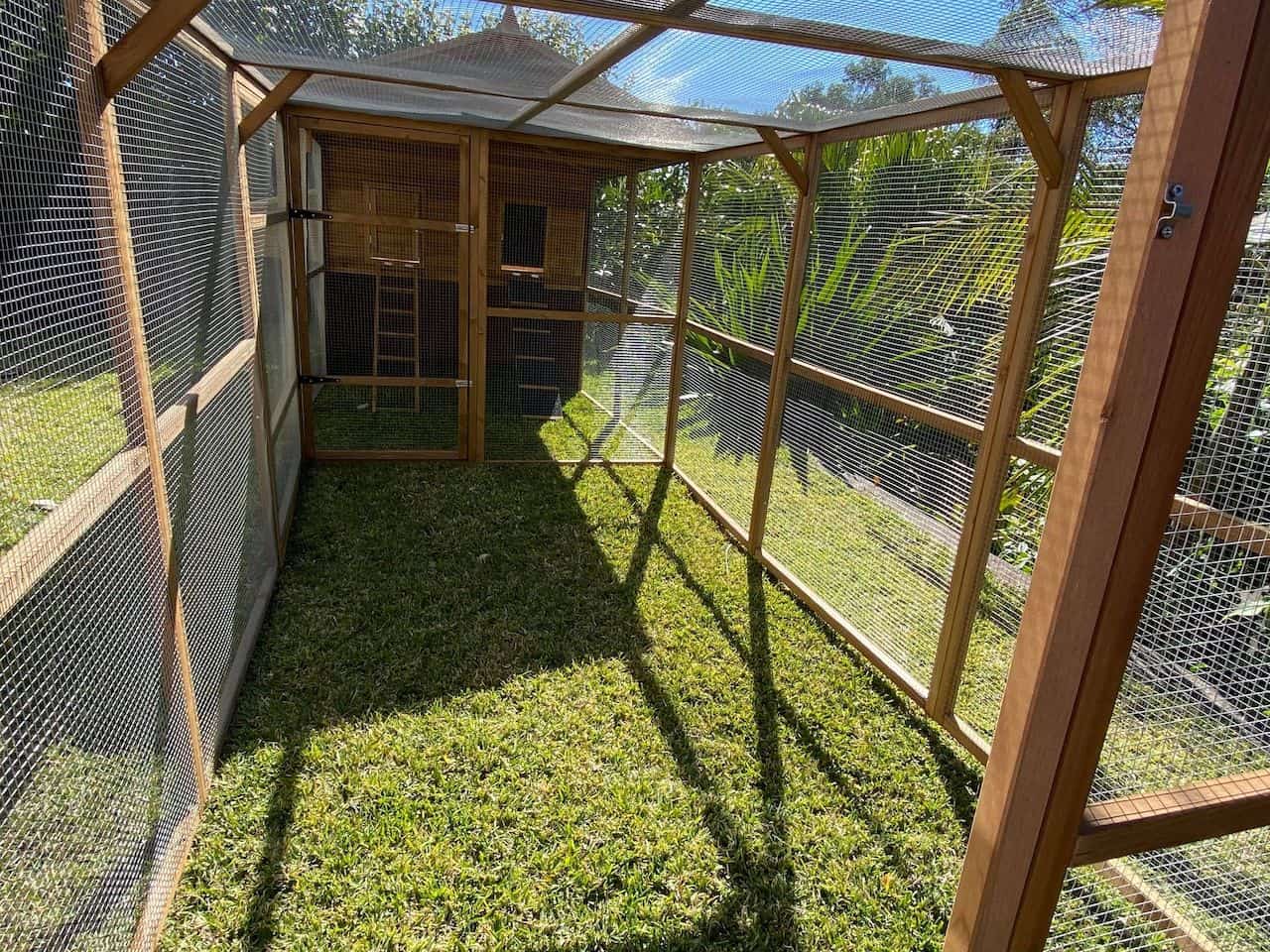
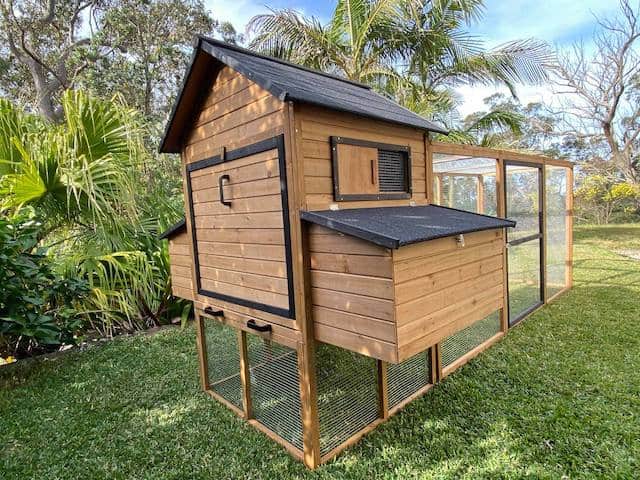
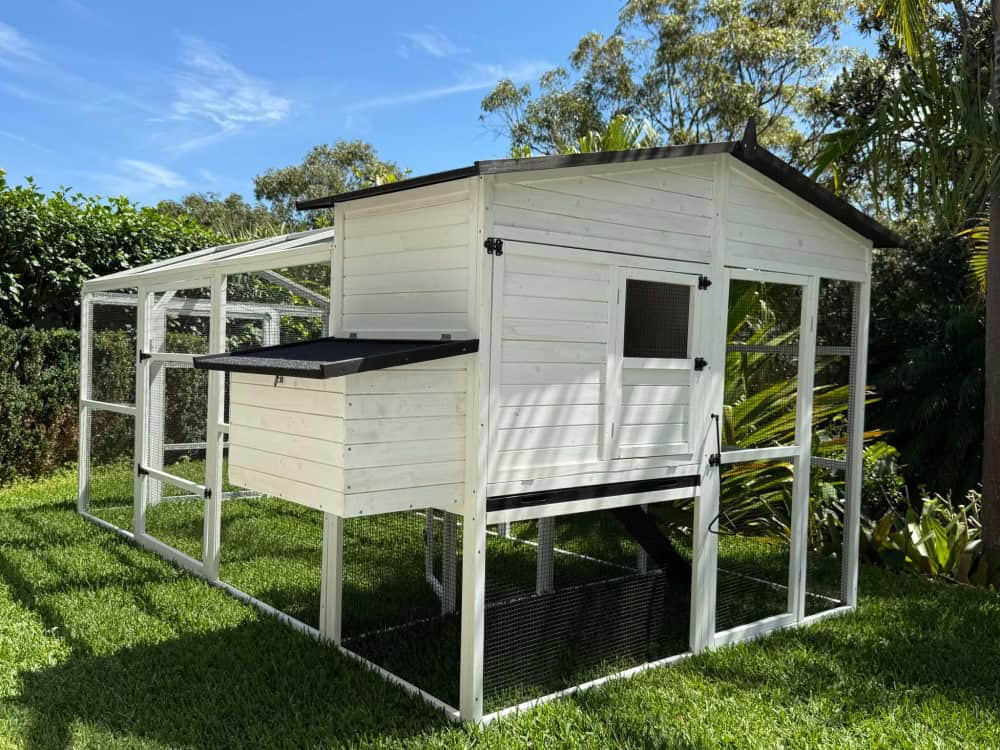
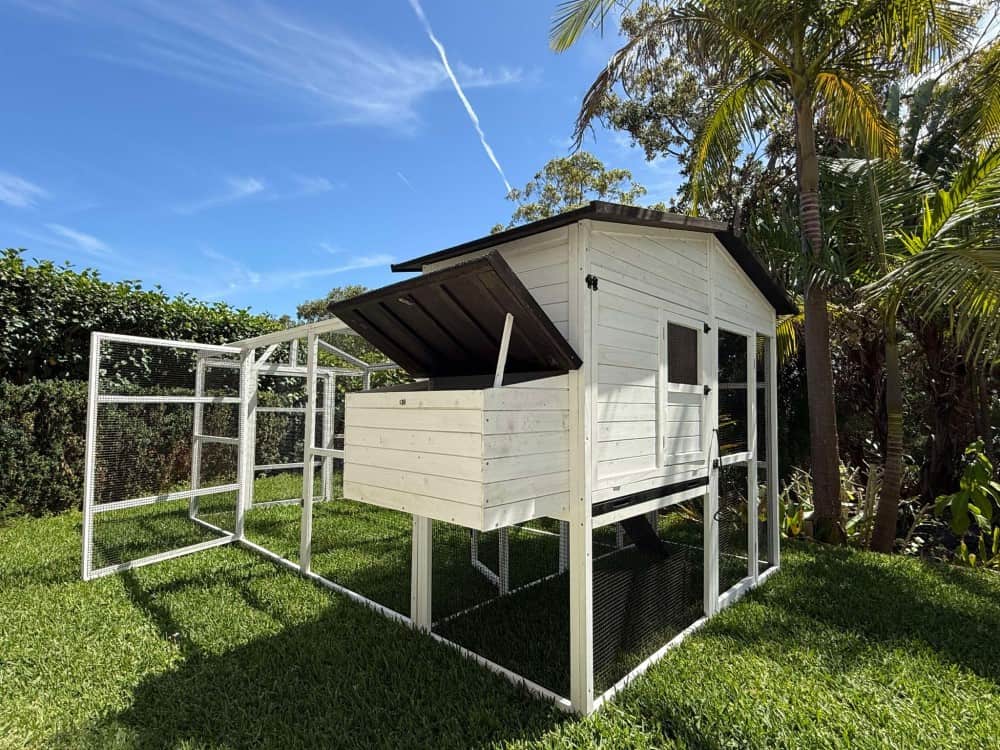
Large chicken coops and walk-in chicken coops are raised higher to give more vertical space and easier access to the area underneath.
When to Use Ground-Level Chicken Coops
While a raised coop offers many advantages, ground-level coops aren’t without their merits. If you have birds that struggle with ramps and ladders, a coop at ground level is simply the kinder choice.
Some keepers also prefer a ground-level coop when using a dirt floor, as it allows for natural drainage and makes the deep litter method easier to manage.
Just keep in mind that predator protection and ventilation are still crucial regardless of your coop’s elevation. A ground-level coop needs to work just as hard on both fronts, so you’ll need to ensure your coop is properly secured and offers a decent level of natural airflow.

How to Raise an Existing Chicken Coop
Do you have a coop sitting flat on the ground that you want to raise? In most cases, you can do the job yourself. Elevating a chicken coop doesn’t require a carpentry qualification. Here are a few straightforward ways to get your setup elevated.
Concrete Blocks, Bricks or Pavers
The simplest option by far is to place concrete blocks, bricks, or pavers beneath the coop’s corners and centre to create a stable, elevated platform. This requires minimal skill, works for both small and large coops, and can literally be done in an afternoon. Just make sure to secure the coop to its new base, especially for lighter structures that could be knocked or blown off.
Raised Timber Frame
Building a tall wooden frame or platform for the coop to sit on is a more permanent solution, well suited to larger setups. The frame needs to be sturdy enough to take the full weight of the coop and sit on level ground. Attach the coop securely to the frame and you’ve got a very solid, long-lasting solution.
Coop Legs
For chicken keepers with a bit of DIY confidence, attaching timber or metal legs to the corners is a clean and effective way to raise the coop. The legs need to be firmly anchored to prevent shifting, especially on uneven ground. This is the most technically demanding method, but you’ll gain a whole heap of room underneath to store feed and materials in, not to mention extra space for your beloved chooks to explore!
Building a Chicken Coop vs. Buying Pre-Made
If you’re starting fresh, you have two main options: build a chicken coop from scratch or buy a pre-made flatpack. Both can work well, but they suit different types of people.
- Build a chicken coop yourself: If you love a little DIY, want complete control over the dimensions, and have the tools and skills to pull it off, this could be the perfect project. You’ll need to plan the hen house, the chicken run, roosting bars, nesting boxes, ventilation, and access doors. It can be deeply satisfying, but it’s also time-consuming and more expensive if you are buying all brand new materials.
- Go pre-made: If you want a faster, more predictable result, you can buy a high-quality pre-made coop. This option gives you everything designed and tested already, with detailed assembly instructions and pre-cut materials.
Most flat-packed chicken coops in the Somerzby range can be assembled with just a battery-powered screwdriver, which feels like cheating in the best possible way! If you run into any trouble with the build, our Chicken Coop Assembly FAQs should give you the answers you need.
All Products
All Products
All Products
All Products
All Products
All Products

All Products
All Products
All Products

All Products
All Products
All Products
All Products
All Products
What to Look for in a Raised Chicken Coop
No matter if it’s your first chicken coop or an upgrade, here’s what to look for when comparing your options.
- Minimum height off the ground: The hen house and nesting boxes should be raised at least 50cm off the ground. This is the baseline for predator protection and chicken coop ventilation.
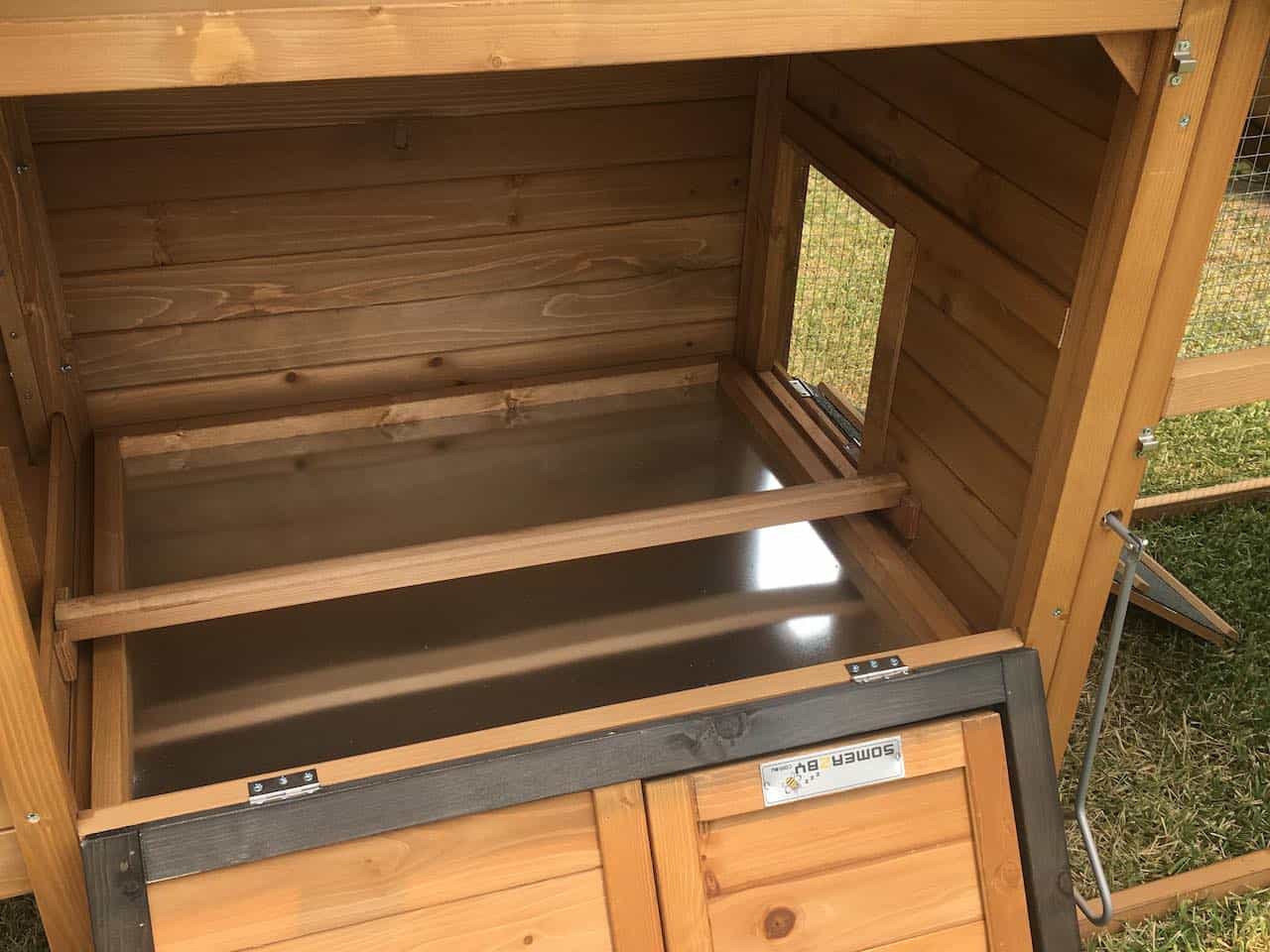
- Roosting bars and perches for chickens: These should be inside the enclosed house area, positioned at a comfortable height. Chickens instinctively want to roost up off the ground at night, and proper roosting bars support this natural behaviour, keeping them calm, warm and happy.
- Number of nesting boxes: As a rule of thumb, you need one nest box for every two to three hens. You don’t need one nesting box per bird. Egg laying hens are perfectly happy to share and will patiently take turns (most of the time). That said, too few nesting boxes leads to squabbles, stress and hens laying eggs in increasingly creative locations around the yard.
- Run size: Think about how many chickens you’re planning to keep and how much floor space they’ll need. If your birds will spend most of their time in the chicken run rather than free ranging, go as large as you can! We recommend minimum 1 square metre of outdoor space per hen. Chickens need enough room to move around, forage and do their thing without feeling cramped.
- Rooster space: If you’re keeping a rooster alongside your hens, make sure the coop is large enough to comfortably accommodate everyone. A large rooster needs space to move freely without causing chaos in a small coop, and the extra height of a taller coop can help keep the peace.
- Build quality. Look for galvanised wire mesh with small holes to keep out predators and pests, solid rot-resistant timber, and a waterproof roof. Your coop needs to handle everything the Australian climate throws at it, year after year.
All Somerzby chicken coops are designed with a raised hen house as standard and are built from high-quality materials that are made to last. From compact chicken houses for a small backyard flock to large walk-in coops for the serious keeper with big ambitions, there’s a solution for every situation.
FAQ
What are common chicken coop mistakes?
One of the most common mistakes is choosing a coop that lacks important features like good ventilation, predator-proof wire mesh, weather protection, enough nesting boxes and adequate roosting space. Another common issue is poor accessibility, making cleaning and egg collection more difficult than it needs to be.
How tall should a chicken coop be?
We recommend raising the coop at least 50cm off the ground to improve airflow and predator protection. The internal height depends on the size of your flock and how you plan to access the coop, but many Somerzby coops can still be comfortably cleaned and maintained from the outside.
Do chicken coops need to be elevated?
While not essential, raising a chicken coop off the ground offers many benefits. It helps deter predators, improves ventilation, reduces moisture build-up and makes the coop easier to clean and access.
Toni’s Wrap
Raising your chicken coop off the ground is one of the best things you can do for your backyard flock. Better predator protection, improved air circulation, lower moisture levels, easier coop cleaning and happier, healthier hens. The case for an elevated chicken coop really does stack up. Aim for a minimum height of around 50cm and adjust based on your flock’s needs and your local conditions.
Whether you’re setting up your first coop or ready for a new coop that does more, Somerzby’s range of chicken coops and runs has something for every backyard and every flock. Your hens will be living the high life in no time!
Related Blogs