




Jul
 ChatGPT
 Claude
 Perplexity
 Grok
 Google AI
 You
 WhatsApp
 LinkedIn
Crate training can be a valuable tool for both you and your dog, giving your dog a safe place to settle while giving you peace of mind when you can’t supervise them. However, leaving your dog in a crate with the door closed for too long can cause stress and negatively affect their wellbeing. That’s why it’s important to understand how long is appropriate.
But how long is too long? In this blog, we’ll explore the different factors that affect how long a dog can stay in a crate, along with practical alternatives if your dog needs to be left alone for longer.
Key Takeaways
- A crate should be a safe, comfortable space that helps your dog relax, supports toilet training and keeps them out of trouble when they can’t be supervised.
- How long a dog can stay in a crate with the door closed depends on your dog’s age, breed, crate training experience and whether it is daytime or overnight. As a general guide, an adult, crate trained dog should spend no more than 4 hours in a crate during the day and up to 8 hours overnight.
- Exercise, toilet breaks and mental enrichment before and during crate time can help your dog stay relaxed and comfortable.
- If your dog needs to be alone for longer than recommended, consider a puppy-proofed area, pet sitter, dog walker or doggy daycare instead of extended crate use.
Understanding the Purpose of Crate Training
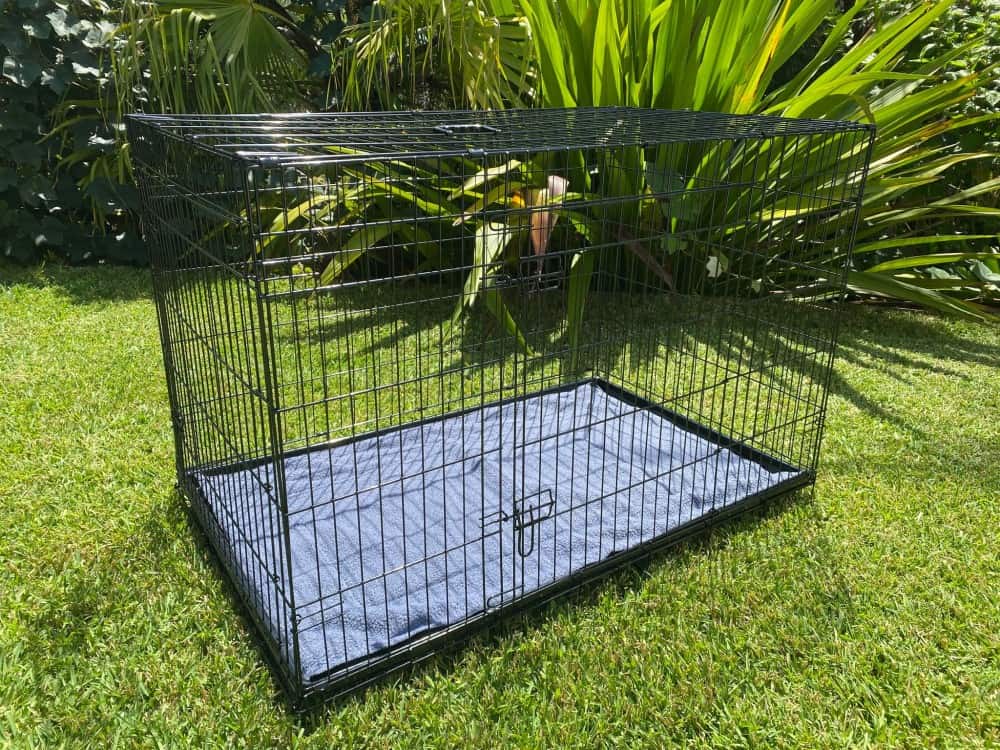
Crate training is a valuable tool when raising a well-adjusted dog. A crate is not a cage to lock your dog away and should never be used as punishment. Used the right way, dog crates provide a safe, den-like space where your dog can rest, relax and switch off without feeling the need to stay alert or protect the home. This gives your dog a chance to properly rest while giving you peace of mind that they’re safe and less likely to get into trouble when you can’t supervise them.
Crate training can also support toilet training, as most dogs naturally avoid soiling the area where they sleep, encouraging them to hold on until they are let outside. It also helps dogs become comfortable spending time in a crate, making future situations such as car travel, vet visits and grooming appointments much less stressful.
Tips for Successful Crate Training
Successful crate training doesn’t happen overnight. Introducing your dog to the crate gradually helps them see it as a safe and comfortable place, rather than somewhere they are forced to stay. Taking the time to follow the right steps will make crate training much easier for both you and your dog and set them up for long-term success.
- Choose the right sized crate and material for your dog
- Introduce your dog to the crate gradually
- Create a positive association with the crate
- Practice closing the crate door and leaving the room
- Build up to longer periods and alone time
See more detail in our guide How to Crate Train your Dog or Puppy.

How Long Can a Dog Stay in a Crate?
There is no single answer to how long a dog can stay in a crate, as several factors will influence what is appropriate for each individual dog.
Time of Day
During the day, an adult, crate-trained dog generally should not be left in a crate with the door closed for more than 3-4 hours at a time. This provides enough time for them to rest comfortably, but longer periods may cause physical discomfort, frustration or the need for a toilet break.
This timeframe works well for situations such as running errands, attending appointments or working from home when you need your dog to settle without constant supervision.
At night, the same dog may be comfortable spending up to 8 hours in their crate while sleeping. As dogs naturally spend this time resting, they are usually less likely to become frustrated by being in their crate overnight. However, they should always have the opportunity to go to the toilet right before bedtime and after waking up.
Age
A dog’s age is an important factor when determining how long they can comfortably spend in a crate. Puppies have less ability to hold their bladders, so they should not be expected to stay in a crate for the same length of time as an adult dog.
If your puppy is under 10 weeks old, limit crate time with the door closed to around 1 hour at a time. Puppies aged 3-12 months can generally manage longer periods of around 2-3 hours. If your puppy needs to be crated for longer, break the time up with regular toilet breaks, playtime and opportunities to stretch before returning them to the crate.
Senior dogs or dogs with joint issues may also need shorter crate periods than healthy adult dogs. Older dogs can become stiff or uncomfortable if they stay in one position for too long, so they may benefit from more frequent opportunities to move around and stretch.
Breed
Your dog’s breed can influence how comfortable they are spending time in a crate with the door closed. More relaxed or lower-energy breeds, such as Great Danes or Mastiffs, naturally spend more time resting and may cope better with longer periods of quiet time.
High-energy breeds, such as Border Collies and Kelpies, typically need more physical activity and mental stimulation throughout the day, so they may require more frequent breaks from the crate. If these dogs are left crated for too long without enough exercise or enrichment, they may become restless or agitated.
Experience Using Crates
A dog’s experience with crate training will affect how long they can comfortably stay in a crate. Dogs that are already crate trained often see their crate as a safe, familiar space and are more likely to settle for longer periods. Dogs new to crates may feel anxious or restless and need a slower introduction.
Start with around 1 hour while you are home, then gradually build up the time. Once your dog is comfortable, you can begin leaving the house for short periods, working up to a maximum of 3-4 hours during the day.
If your dog struggles, simply reduce the time in the crate and continue training at a slower pace.

All Products


All Products


All Products


All Products


All Products
Tips for Making Crate Time Successful
Once your dog is comfortable with crate training, there are several simple steps you can take to make time in the crate more enjoyable and help them settle more easily.
Exercise Before and After
Make sure your dog gets plenty of physical exercise and mental stimulation before spending time in their crate. This will help burn off excess energy, making it much easier for them to relax and settle. As a general guide, aim for around 60 minutes of activity before crate time and another 60 minutes afterwards to allow them to stretch their legs and burn off energy.
The right activity will depend on your dog’s age, breed and energy level, but could include a long walk, a trip to the dog park, playing fetch, training sessions, interactive games or playtime with other dogs. Simply throwing a ball a few times is unlikely to provide enough physical and mental stimulation for most young, active dogs.
Potty Breaks
Always give your dog the opportunity to go to the toilet immediately before going into the crate. This helps them stay comfortable while they are resting and reduces the chance of accidents. When they come out of the crate, take them straight outside again so they can relieve themselves before returning to normal activities.
Mental Stimulation Inside the Crate
If your dog will be spending a few hours in their crate during the day, providing a safe form of mental stimulation can help keep them relaxed and engaged. Toys that slowly dispense treats are ideal, as they encourage problem-solving while allowing your dog to remain settled in the crate.
A KONG or lick mat filled with suitable treats can be a great option to provide enrichment and make crate time a more positive experience.
Alternatives to Extended Crate Time
Crates are a valuable tool for keeping your dog safe and comfortable, but they are not designed to be used for long periods every day. If your schedule means your dog needs to be alone for extended periods, consider these alternatives to provide them with more space, movement and enrichment:
Puppy-Proofed Area
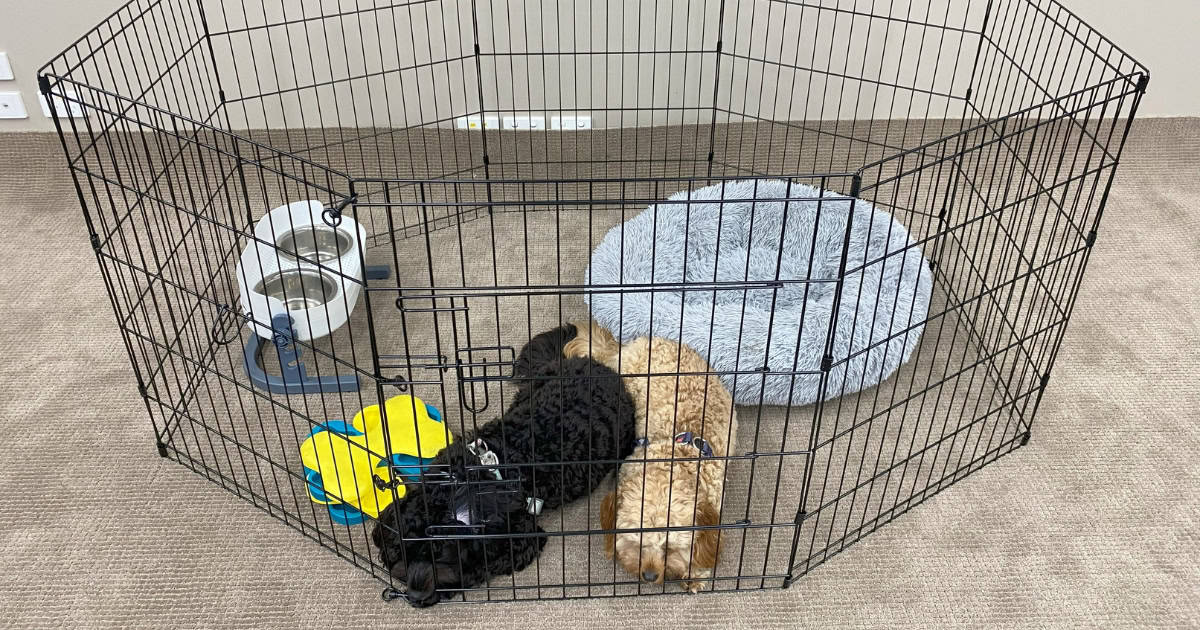
A puppy-proofed area can give your dog more freedom while keeping your home safe from unwanted chewing or damage. You can use a small room, gated area or playpen. Add a comfortable bed, water and enrichment toys to keep them settled and entertained while you’re away.
Pet Sitters or Dog Walkers
If you’re away for most of the day, hiring a pet sitter or dog walker can greatly improve your dog’s comfort and routine. A quick visit in the middle of the day gives your dog a chance to go to the toilet, stretch their legs, get some exercise and enjoy human interaction, helping break up long periods alone.
Doggy Daycare
For social or high-energy dogs, doggy daycare can provide a full day of supervised play, socialisation and mental stimulation. It is a great option when you’re busy or at work and can’t supervise your dog, while helping prevent boredom and unwanted behaviours at home.
FAQ
Is it okay to leave my dog in a crate while at work?
No. We recommend limiting daytime crate use to a maximum of around 4 hours for an adult, crate-trained dog. If you need a solution for a full work day, consider setting up a larger dog-proof area or using alternatives such as a pet sitter or doggy daycare to give your dog more space, interaction and opportunities for breaks.
How long is too long to leave a dog in a crate?
For an adult, crate-trained and healthy dog, we recommend a maximum of around 4 hours in the crate during the day and up to 8 hours overnight. Leaving your dog crated for longer than this may lead to discomfort, stress, frustration or accidents.
Can I crate my dog for 12 hours?
No, crating a dog for 12 hours is not recommended. This is a long period without a toilet break, movement, enrichment or interaction. If you need to be away for this length of time, consider alternatives such as doggy daycare, a pet sitter or a larger dog-proof area to help keep your dog comfortable and happy throughout the day.
Toni’s Wrap
Crate training isn’t about restricting your dog. It’s about giving them a safe place to rest while giving you peace of mind when you can’t supervise them. By understanding your dog’s individual needs and using a crate responsibly, you can help prevent unwanted behaviour without compromising their wellbeing. With patience and consistency, crate training can become a positive routine that benefits both you and your dog.
Related Blogs